
This week we celebrate UNESCO’s International Day Of Light. It is held on 16 May every year, to mark the day that the American physicist Theodore Maiman demonstrated the world’s first laser. Laser technology went on to revolutionise the world, becoming an integral part of our lives.
The International Day Of Light is designed to ‘celebrate the role light plays in science, culture and art, education, and sustainable development, and in fields as diverse as medicine, communications, and energy’[1].
To take part, this week we look at the role of light in language. Light was one of the first experiences and concepts for early humans, while modern humans are surrounded by light 24 hours a day. It is no wonder that so many idioms and expressions exist to convey all the intricacies of light. In fact, some words and expressions about light are so unique that they are not translatable into English. Here are some of our favourite ones:
Mångata (Swedish)
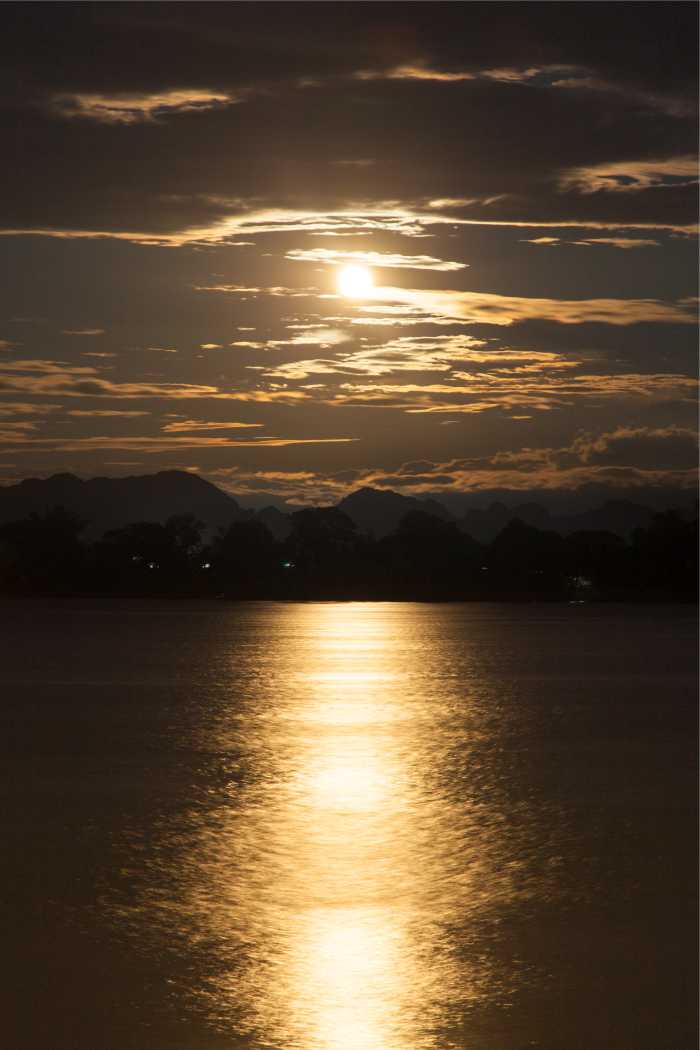
If you have ever admired the wavy strip of moonlight on the surface of the sea or another large body of water, you will recognise the meaning of this Swedish word. It translates literally as ‘moon road’, and is similar to the Russian ‘Лунная дорожка’ (moon path).
Kaajhuab (Hmong)
 This word from the Hmong language describes the light that comes early in the morning and dissolves the morning mist.
Komorebi (Japanese)
 You will know exactly what this Japanese word means when you think of the sunlight falling through the canopy of forest trees and onto the ground. The curtain of light and the shadows of the trees create a spectacular visual experience that has no equivalent English word.
Yeoubi (Korean)
 Literally meaning ‘fox rain’, this word describes a light rain that falls while the sun is still shining through it.
Kawaakari (Japanese)
 Meaning ‘the glow or gleam on the river at dusk or in darkness’, this is another Japanese word that has no equivalent word in English.
[1] https://en.unesco.org/commemorations/dayoflight
By Maia Nikitina